
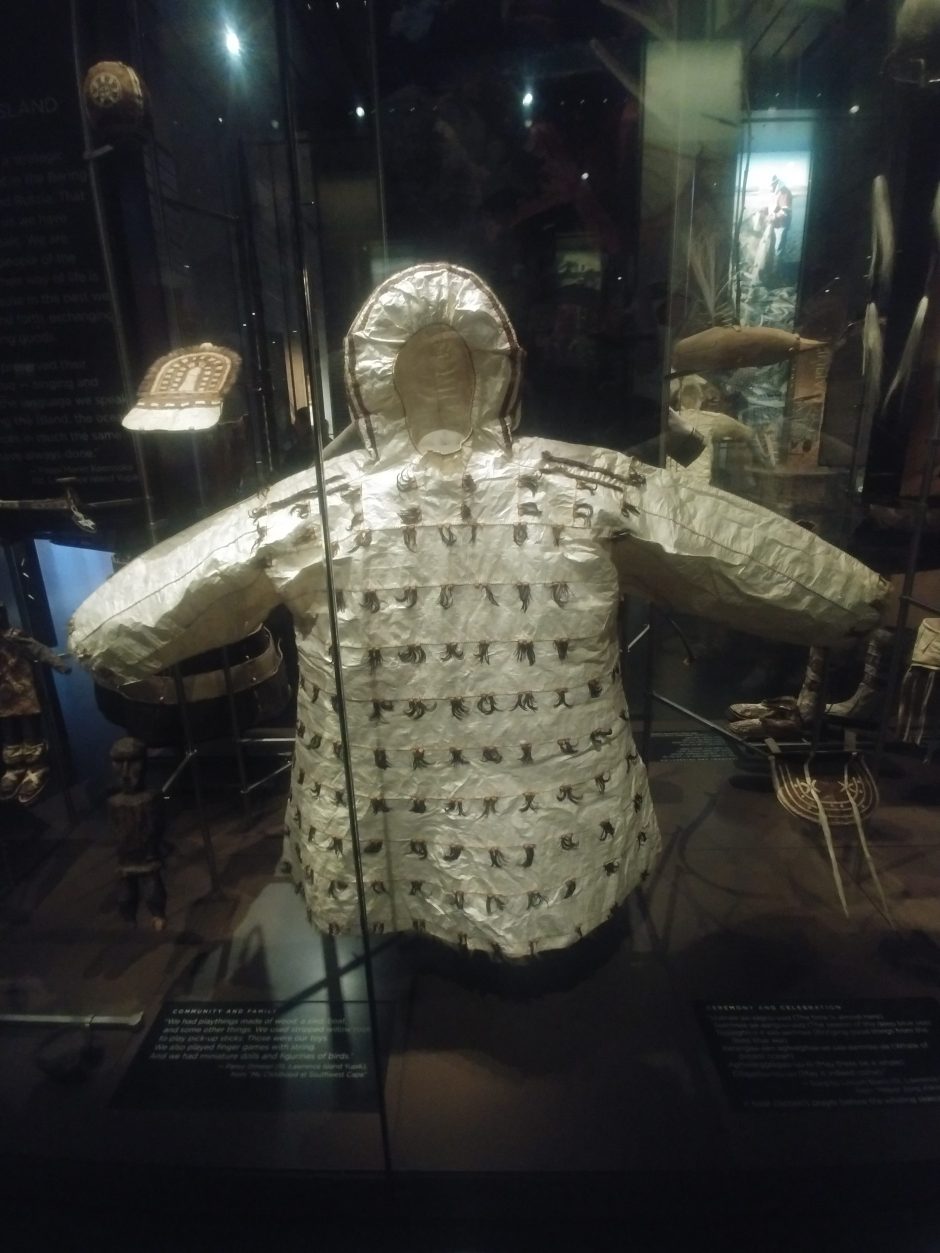
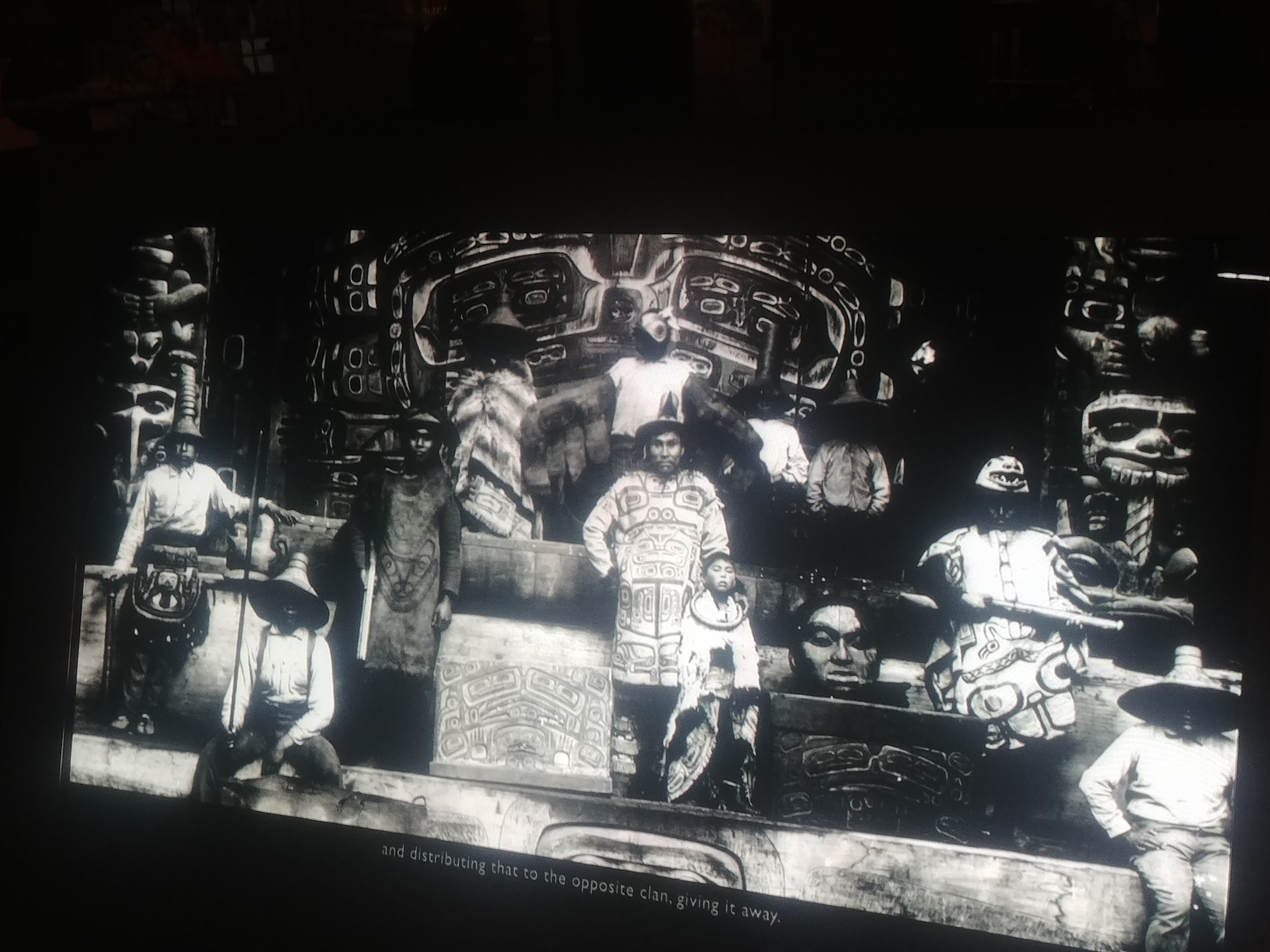
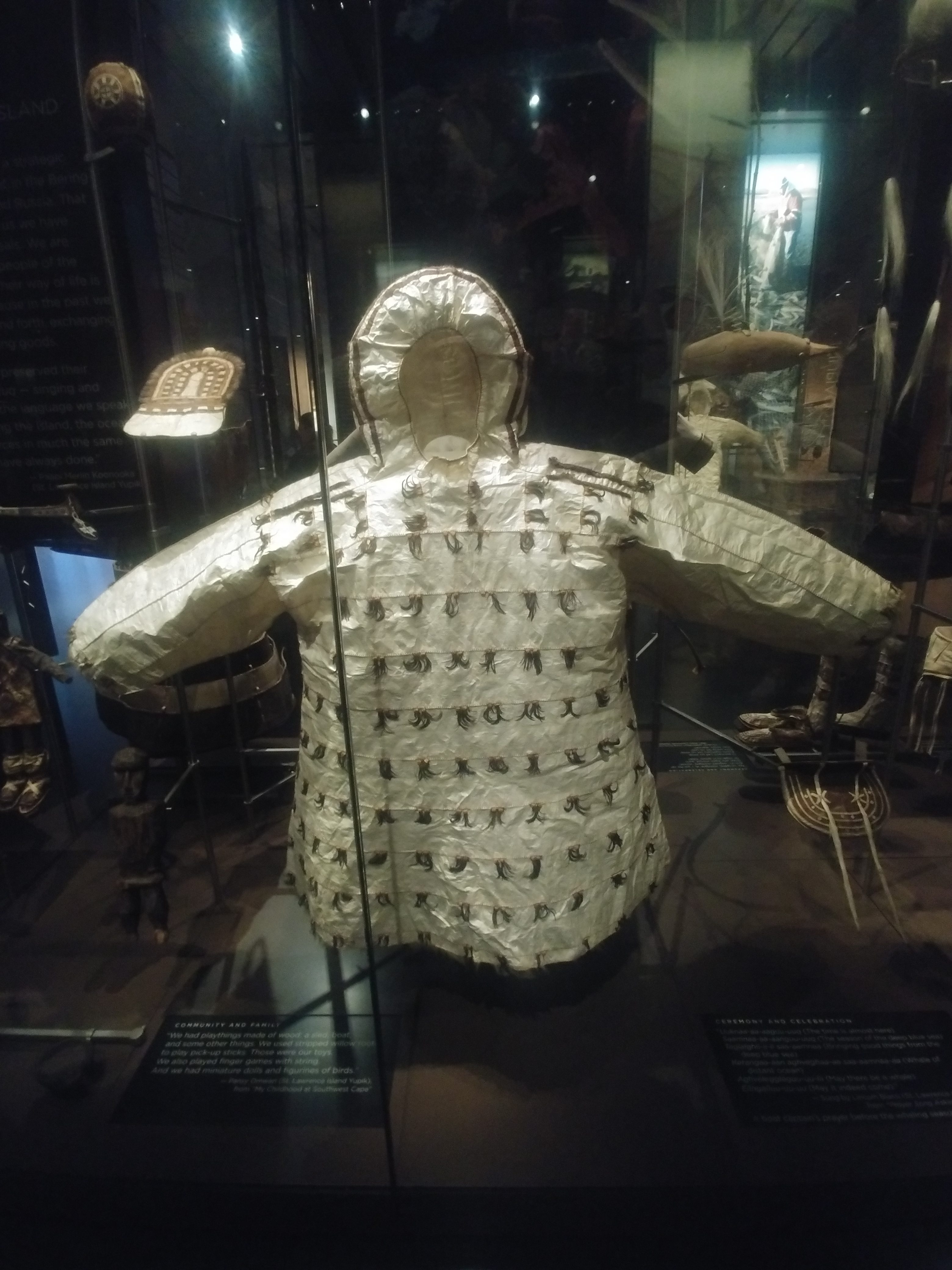
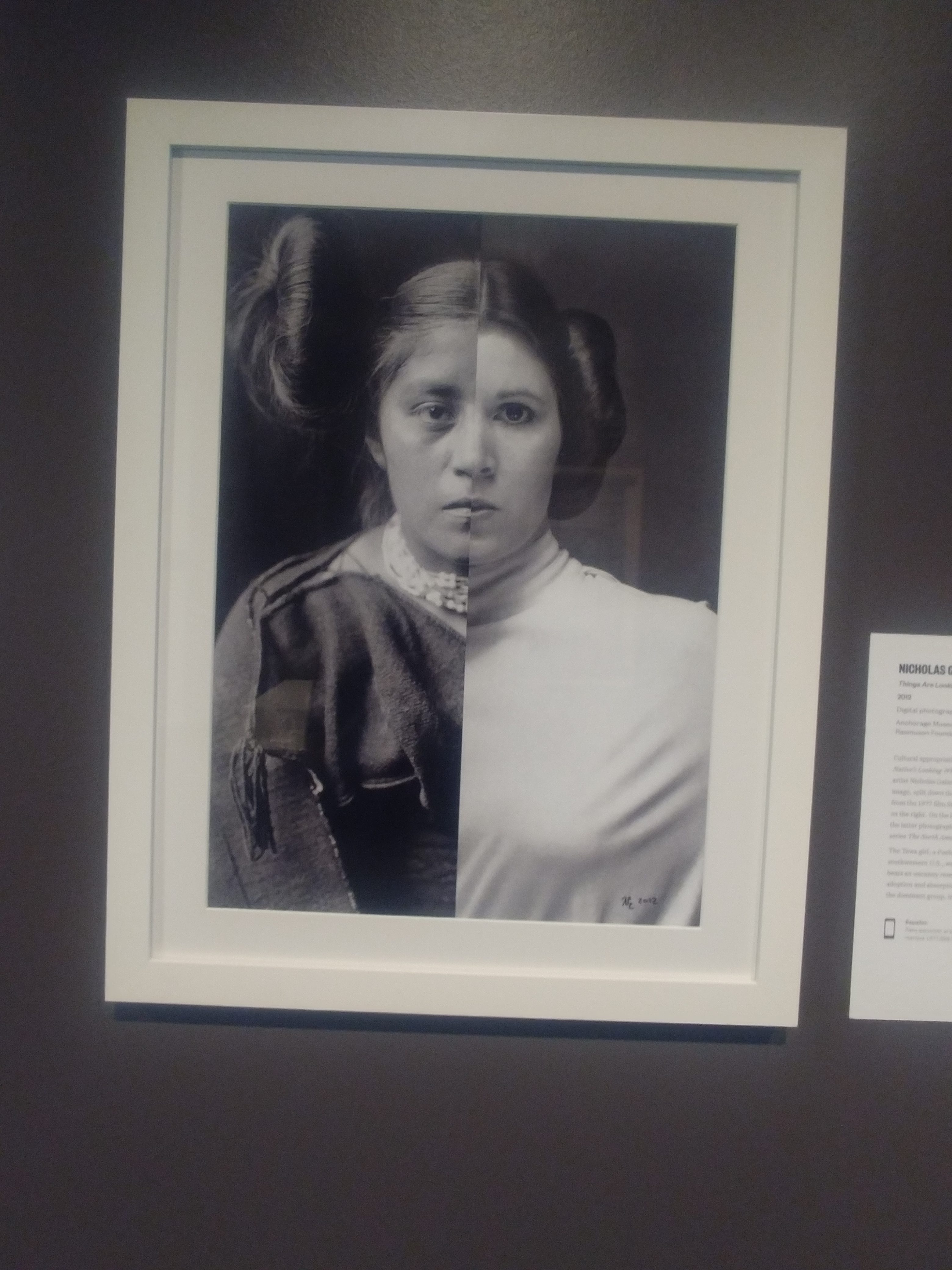
The “First Peoples of Alaska Exhibit” is a comprehensive collection on loan from the Smithsonian Institution. In this “first of its kind” display, hundreds of indigenous Alaska artifacts have been made accessible for hands-on study by Alaska Native elders, artists and scholars. The exhibit focuses on peoples, history, archaeology and cultures across the circumpolar North.
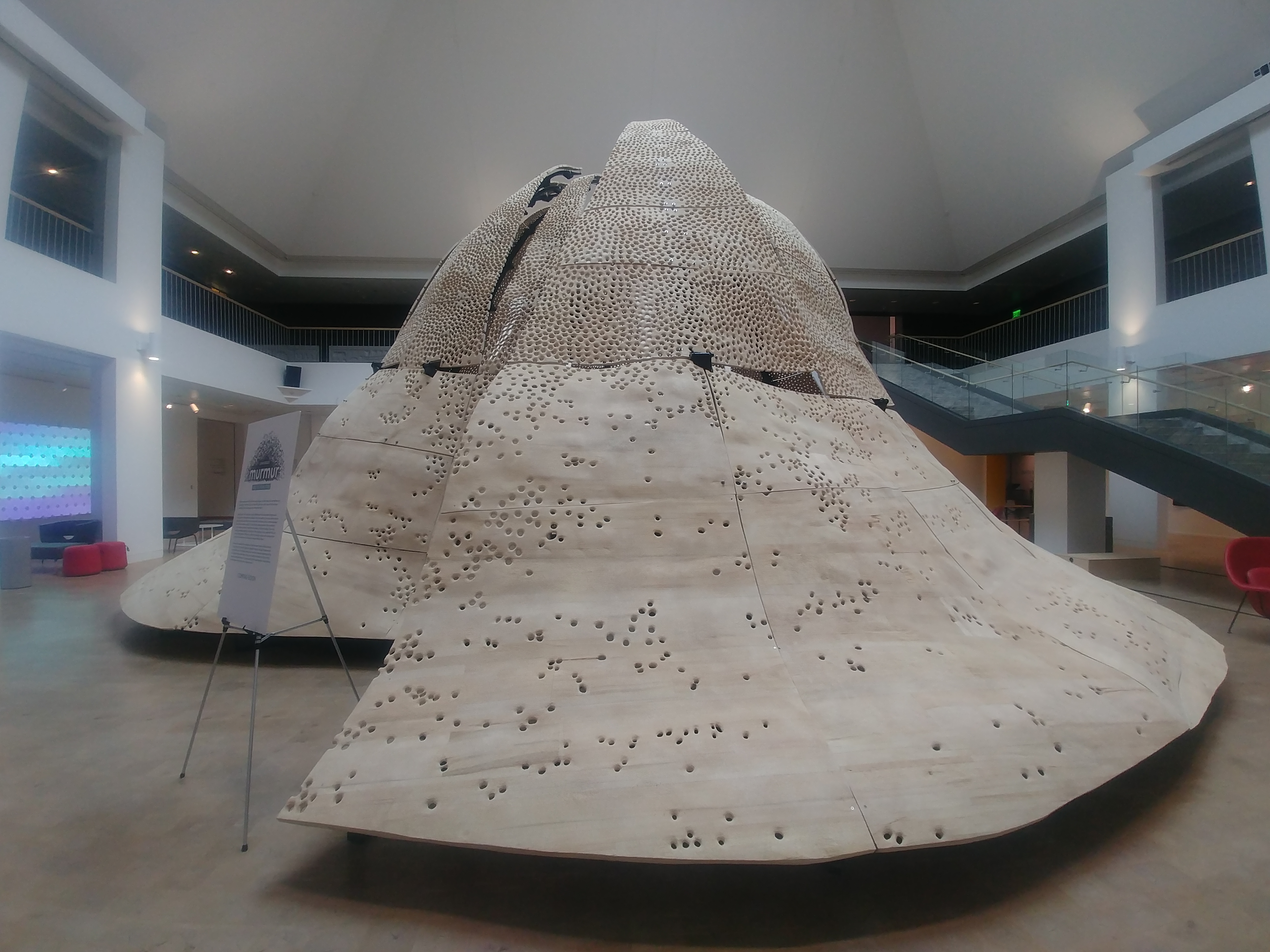
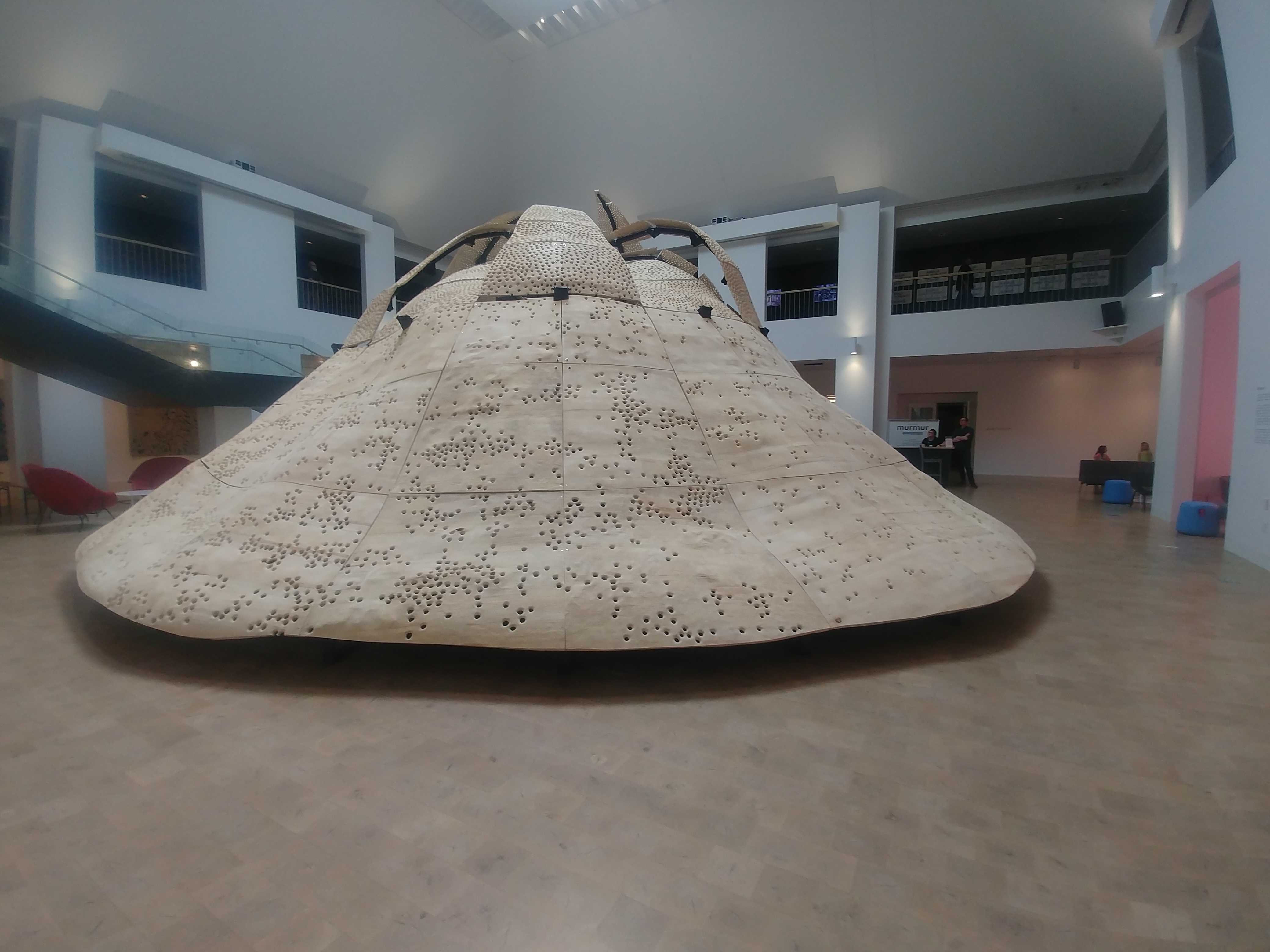
A pingo, also called a hydrolaccolith is an arctic hill of ice that grows over centuries in the Arctic’s highest latitudes, then collapses, pockmarking the tundra.
Using salvaged Alaskan yellow cedar, John Grade, one of the world’s leading contemporary artists, has created an intricately carved sculpture (15’ x 38’ x 42’) that represents This sculpture simulates a pingo in Alaska’s Noatak National Preserve, mapped by the artist using photogrammetry. The sculpture is animated, and mimics the pingo’s life cycle at a time when this is accelerating due to unprecedented environmental change.
 Dr. Schaffer in Alaska
That is so cool!
LikeLike